Love that you took the time to educate us
Thank you so much. I looking at your beautiful pieces

There's a particular kind of thrill in spotting a piece of vintage furniture across a crowded estate sale — the lines, the patina, the quiet promise of what it could become. But there's a gamble in it too. Not every piece is worth your money, your time, or the back-breaking effort of getting it home.
After years of rescuing furniture, we've learned that the difference between a great find and a "what was I thinking" usually comes down to a handful of things you can check in the few minutes while you're standing in front of a piece. Some of it tells you a piece is worth a serious look. Some of it tells you the repair bill is about to climb. None of it makes the decision for you — that part is always yours — but knowing what to look for means you're deciding with your eyes open.
So before you hand over your cash, run through this list. Here are seven signs a vintage piece is worth rescuing — and three issues costly enough that you'll want to price them in first.
Think of these as green lights. You don't need every single one — the more that are true, the stronger the piece, and the more confident you can be that it's worth bringing home.
You have to genuinely like it. That part is non-negotiable. But love alone isn't enough. Vintage furniture was built for the rooms and routines of its era, so you need to check it against yours — the cabinet space, the drawer space, the dimensions, the footprint in the room you have in mind.
Finding a vintage piece to suit a specific spot in your home can be surprisingly tricky. Measure your space before you go, and bring those numbers with you. When you find a piece that hits both marks — "I love this" and "this works here" — it's worth serious consideration.
Open a drawer and check the sides to see if the construction is dovetailed. That's the little triangular shapes where the side wood meets the front panel. Often, they are also dovetailed on the back. So pull that drawer all the way out to check. Dovetailing is always a good sign, but dovetailing in the front and back of the drawers is even better.
A little stickiness, or a spot where a drawer rubs, is not a dealbreaker — that's an easy fix with sanding or wax on the drawer glides. What you're really looking for is whether the drawers are fundamentally sound and tracking as they should.
Investigate:
For drawers that seem wonky, see if you can pull them out completely, but be gentle. Some pieces will have unfamiliar drawer stops that you’ll not want to break in the process. But once you get them out, the issue could just be that the screw came loose in the back of the wood glide - very common and an easy fix. So do a little bit of investigation to see if you can figure it out, with just common sense.
"Mostly smooth" is good enough. But beware, a drawer that drops, rocks side to side, scrapes badly, or refuses to sit level can sometimes hint at a bigger issue.
A blemished top scares a lot of buyers off, and honestly, it shouldn't. Refinishing a top is one of the easiest jobs there is in all of restoration. A water ring, light scratches, a tired-looking finish — none of that should make you walk past a piece you otherwise love. And, if it’s got an original glass top, that’s a great find. Tempered glass on top of valuable furniture is always a smart move.
But if large trim details are broken off, or there are big dents deep into the wood - especially the edges. It might tip the scales out of the restoration boat and into the refinished one. Restoration is about taking it back to original condition. And with big dents or chips on edges or corners, you can’t add wood that isn’t there. It would be too obvious. But refinishing with paint or lacquer can hide a ton of damage.
So don’t be afraid of a little surface damage, just know that some damage will make restoration at a reasonable price impossible, and refinishing your only choice.
Brand matters — for quality, for resale value, and for how well a piece holds up over time. If you're not sure what to look for, start with our blog 6 Top Vintage Furniture Brands. That list isn't exhaustive, but it's a great place to begin.
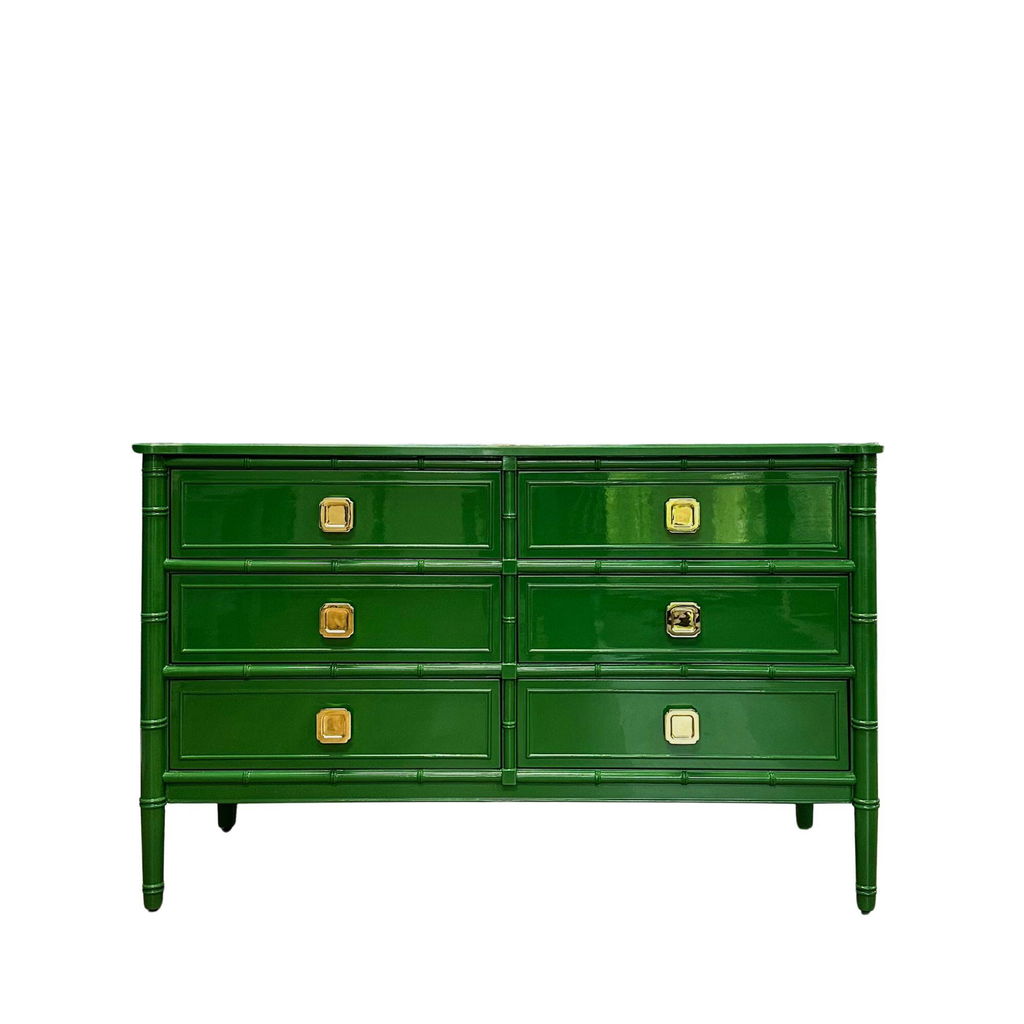
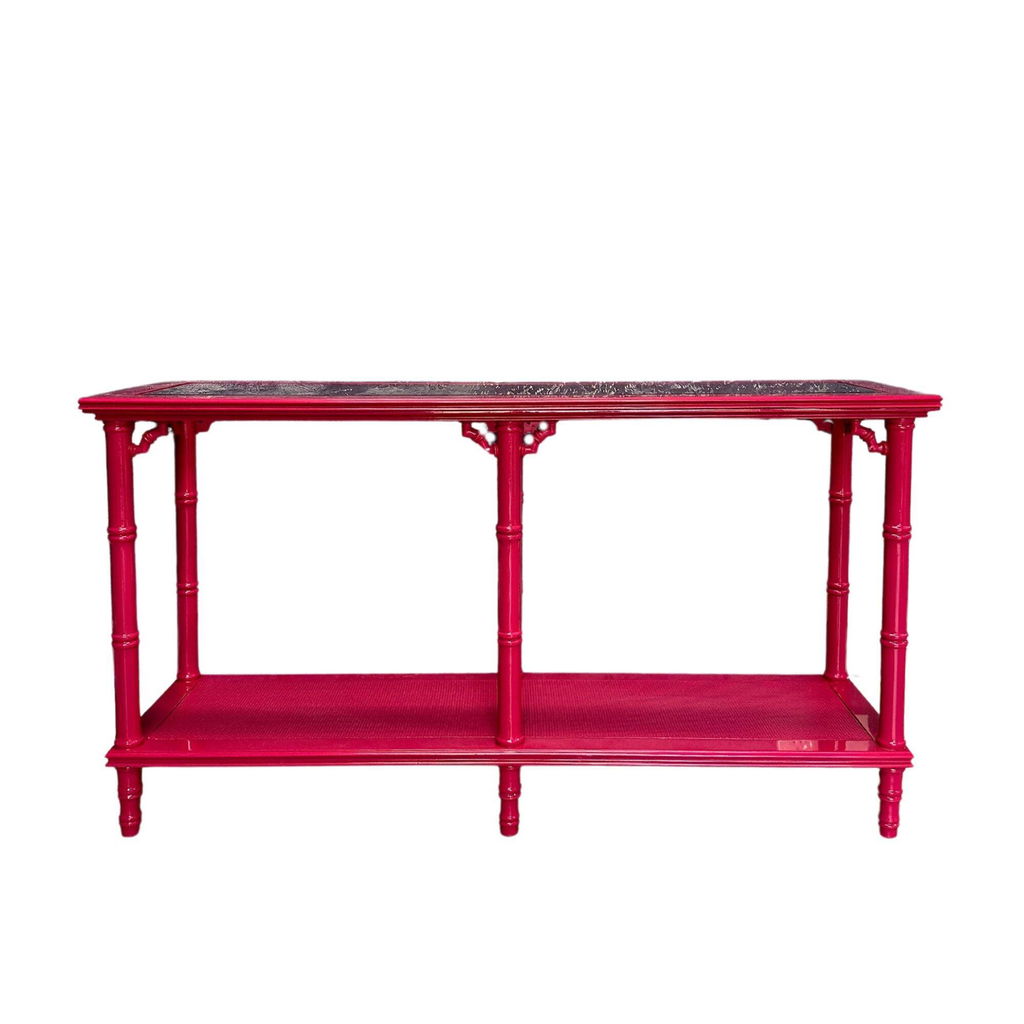
One thing a lot of people miss: vintage brands are regional. What's plentiful depends entirely on what furniture stores stocked in your part of the country 50 years ago. Henry Link and faux bamboo pieces, for example, turn up constantly in Florida, Georgia, and across the South — but they're far rarer here in the Pacific Northwest. Learn what's common in your area, and you'll also learn to recognize a genuine find when you see one.
Original hardware is part of a piece's character — and its value — so check that it's all there and working. While you're at it, do the magnet test: hold a small magnet up to the hardware. If the magnet sticks, you're looking at a base metal, possibly with brass plating on top.
Why does that matter? If you're hoping to polish the hardware up to a bright brass shine, plated pieces often won't cooperate. But if you love that aged, lived-in look, you're good to go. Either way, it's worth knowing exactly what you've got before you fall in love.
This is the big structural check, so don't skip it! Push gently on one corner of the piece. If it shifts or wobbles, then it is “racking” — meaning it's out of square. The same goes for large cracks in the frame.
None of that makes a piece unbuyable — but it does change the math, which is exactly why structural movement shows up again further down this post. For now, just know that a solid, square frame is one of the best signs you've found a keeper, and a wobbly one is something you'll want to think harder about.
This is the sign people forget — and it's the one that causes the most regret later. Furniture from earlier eras was scaled for the homes of earlier eras. A very short buffet or china hutch can look oddly stranded in a room with tall, modern ceilings.
Pay close attention to the height of the lower section on a buffet — some sit surprisingly low. Oversized Art Deco pieces can be absolute showstoppers, but they need the right room to carry them off, and they can be brutally heavy to move.
We created a 2 Page PDF you can download to save or print. Use it to check the dimensions of a vintage item you're shopping for. You will naturally expect vintage to fit with the rest of your furniture, which is most likely newer. Sometimes that item will still work, but other times it may not.
Now for the other side of the ledger. These three don't belong on the "signs" list, because they aren't really yes-or-no checks — they're cost questions. Each one is an issue big enough to move the math on whether a piece is worth it.
The trick is simple. When you spot one, don't panic and don't ignore it. Get a rough number, and weigh that number against the asking price and against what you're actually getting.
This is the one most likely to surprise you. Push gently on one corner of the piece — if it shifts, twists, or wobbles, it's out of square or racking. Large cracks running through the frame belong in the same category. Not all of them will cause racking so don't assume that no racking means no cracks.
Racking is rarely a DIY fix. It usually means bringing in a carpenter who can read the joinery and decide how to bring the piece back to square, and that cost can range from modest to significant depending on what they find. So before you commit, follow my recommendation above and do a little investigation. Asking for an estimate over the phone with a carpenter is impossible. He or she can’t know what the fix is until they evaluate it themselves. So pull the drawers out, take a closer look and maybe take some photos to send to your carpenter. This is the flag where the number genuinely matters.
Investigate:
Remove all the drawers to see if there may be an internal support that is missing or cracked. Often structural cracks can only be seen from the inside. A 5 minute investigation can you save you a lot of heartache.
Missing hardware has the widest price range of the three — which is exactly why it needs a closer look rather than a snap judgment. On a common piece, replacement pulls and knobs are cheap and easy to find. Barely a flag at all.
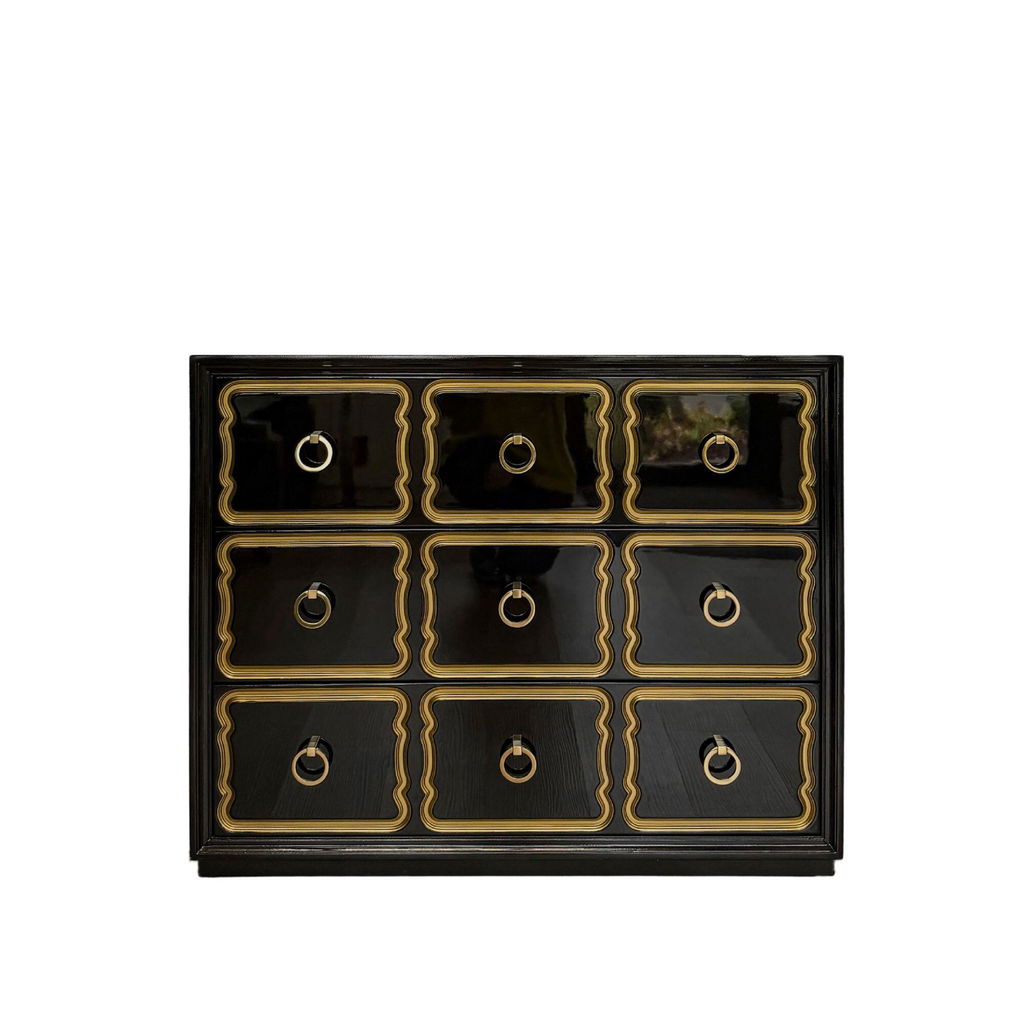
But on a coveted brand or an iconic design, original hardware can be nearly impossible to source. The space allotted for it is often small and specific, so you can't just swap in something close. I've personally spent more than two years hunting for replacement hardware to finish a set of these as nightstands.
So the real question isn't "is hardware missing" — it's "missing on what." The piece itself makes a big difference. Identify it first. Do a little Googling and see if it's a valuable item. Sometimes it's the design lines more than the hardware that is the attraction. There are significant pieces that had very cheap hardware back in the day, so new hardware is expected. But with others, I would never buy it without the hardware. That tells you whether this flag costs you ten dollars, $200 or two years of patience.
On a display cabinet or china hutch, missing glass costs more than it looks. Replacement shelves and shaped display glass can run a few hundred dollars, and cutting glass to fit is genuinely not a DIY job.
It's rarely a dealbreaker on its own, especially if everything else is perfect — but it's real money, so spot it, take measurements and get a quote from your local glass shop. Fold that figure into the price you're willing to pay.
Here's what ties all three together: none of them is automatically a no.
Whether a costly flag matters depends entirely on the deal in front of you — your budget, your patience for tracking down a craftsperson and waiting on the work, and how much you want the piece. The very same issue lands differently on different pieces. A $300 glass replacement could be a real dealbreaker on a $40 booth find. On a gorgeous piece you're getting for free — or an iconic one you've been hunting for years — that same $300 barely registers.
The flag didn't change. The math did. Price it, weigh it, and make the call that's right for you. Download my sourcing checklist in the button below.
Hunting for vintage furniture is part skill, part instinct. The signs sharpen the skill — the more pieces you check, the faster you'll spot a keeper. The instinct grows on its own, one estate sale at a time.
And remember why we do this in the first place: every piece worth rescuing is a piece kept out of a landfill and given another fifty years of life. That's the whole heart of it.
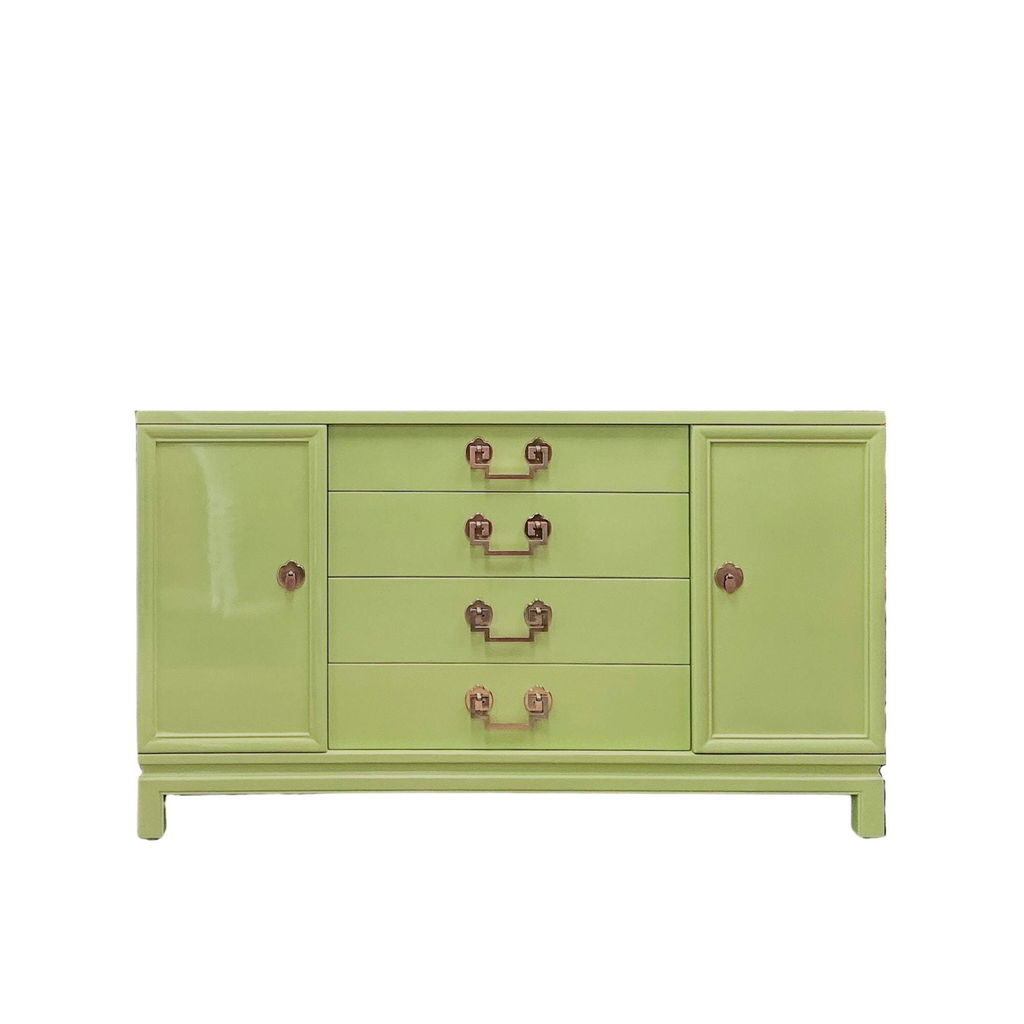
If you'd rather skip the gamble — and the heavy lifting — browse our collection of refinished pieces and rescues. Everyone has already passed my checklist, so all that's left for you to do is fall in love.
Comments
Love that you took the time to educate us
Thank you so much. I looking at your beautiful pieces