The Case for Vintage Furniture: Advice From 3 Interior Designers
Written by: Casey Grace
|
|
Time to read 5 min
Over the years, I've had the pleasure of working with many designers. Each one brings a slightly different approach to their work, but a few things seem to be universal among them. The most consistent one is this: they all use vintage furniture in their design solutions. I've seen them bring vintage into all kinds of spaces, including kids' rooms. In this article, I'm sharing advice from three designers who have purchased our pieces, and other vintage finds, for both their clients' homes and their own.
Why Designers Choose Vintage
When I asked each of them, "What draws you to vintage or refinished pieces over new furniture for a client?" the answers were different in detail but similar at the heart.
Eva Burns, from Eva Burns Studio, in Texas, is drawn to the warmth that vintage brings, and to something even more specific: the fact that older furniture is often genuinely handmade.
"The history and soul of vintage pieces is what initially draws me in. I love knowing that a piece has lived a life before I have it, that it has a story. Another huge component for me is the handmade nature that a vintage piece will have. The human touch gives life to a space in a way that can't be achieved if everything is brand new."
Eva purchased Delaney from us and used it in this living room. She added the wallpaper behind the shelves, and I love how the rest of the room is layered and eclectic. It's warm, lived-in, and joyful, not to mention expertly styled.
Carolyn Brazil, a Portland-based designer (Carolyn Brazil Design, LLC), uses vintage to balance rooms that might otherwise feel overwhelmed by new furniture. Like Eva, she's drawn to the stories that come with something old.
"I love the stories and history that are often shared about an older piece, and I like to bring that personality into a space. There are many parts to my design process, but layering in older pieces is an important one because it adds a level of comfort to a space that is subtle but noticeable."
Vicki Simon, another local Portland designer, (Vicki Simon Interior Design), has come to us numerous times with very specific needs already identified. We've worked with her on bathroom vanities, nightstands, and more. When Vicki calls, she is on a mission.
"My choices are always very intentional. I take into account the overall look for the room, the character of the piece and how it will mix in, but especially the details and style of piece related to the style of home. The hardware, the scale, and what color would transform the piece into something unique, are also considered."
This is where designers tend to differ, and honestly, thank goodness for that. Designers are as unique as their clients. They bring their own aesthetic sensibilities, their own regional influences, and their own way of reading a room. The ones we work with are no exception, and their approaches to vintage are just as varied. For Vicki, vintage is often a color solution first. The fact that it's vintage is almost secondary.
"My preference is bedrooms, powder rooms, dining rooms, entry foyers. Places where a color pop would be appreciated and used as an accent."
I love how Vicki layers patterns and color. She often has clients with older homes, so the "vintage" idea is inherent in the home already. So she uses colorful vintage for very specific applications.
For Eva, she feels strongly that "any room can have a vintage piece. I've mixed vintage into living rooms, dining rooms, offices, bedrooms, bathrooms, and kitchens. Even the waiting room in a doctor's office!"
"Any room can benefit from a vintage piece. It doesn't have to be a major statement. Even one smaller piece can add depth and character to a space and helps it feel more collected as opposed to overly coordinated."
When it comes to putting it all together, there's a common thread among all three of them. They're always looking at the whole picture, juggling architecture, color, pattern, texture, spatial relationships, traffic flow. Nothing exists in isolation.
Carolyn pays particular attention to finish and sheen, especially when considering pieces from CGS
"I keep in mind the finish on a piece and how it relates to the other furnishings in a room. I love a lacquered high-gloss finish in bedrooms and dining rooms because it brings in that sheen and saturation of color that creates a beautiful focal point, and reflects the softer lighting often used in those spaces. For a more traditional living room, I might use a refinished, stained wood piece or one with a lacquered matte finish to blend more quietly with its surroundings."
The Most Important Question: How Do You Want to Feel?
In the book Your Brain on Art, the authors reference a unique experiment at a major design conference in Italy from 2019. Researchers built out three rooms with distinctly different design aesthetics and put biometric monitors on everyone who walked through. In many cases, what people said they liked best cognitively was not what their bodies preferred. Their nervous systems told a different story entirely.
In my humble opinion, interior designers have honed their instincts, and quite possibly their nervous systems, to gauge what works and what doesn't. When designing your home, take cues from Vicki, Carolyn and Eva to get the details right. In the end though, you're the arbiter of what feels right to you. Design is ultimately about creating spaces that reflect who you are and how you want to live in them. Often, it's the objects with stories, the ones that remind us we're human, that tend to make a space feel truly complete, balanced, warm, and grounding.
My moto is, the beauty is in the mix.
Vicki Simon
And across the board, the advice is to stop worrying about matching. Eve recommends you "don't worry if things 'match' or not. Matching isn't the point anyway. Instead, focus on creating layered spaces that tell a story that is uniquely you." Similarly, Vicki shared: "My motto is 'the beauty is in the mix.' But I highly recommend the trained eye of a professional interior designer to craft the vision of that mix."
Carolyn shared,"I often hear compliments about spaces I've designed because of how good they make people feel and how they have such warmth to them." That feels like success to me.
So trust the feeling. When you shop for vintage furniture or walk into a room and something settles in you, that's real data. Your body often knows before your brain catches up.
I so appreciate Vicki, Eva and Carolyn for their contributions to this article. Links to their websites are peppered throughout the article and I encourage you to follow them on Instagram at:
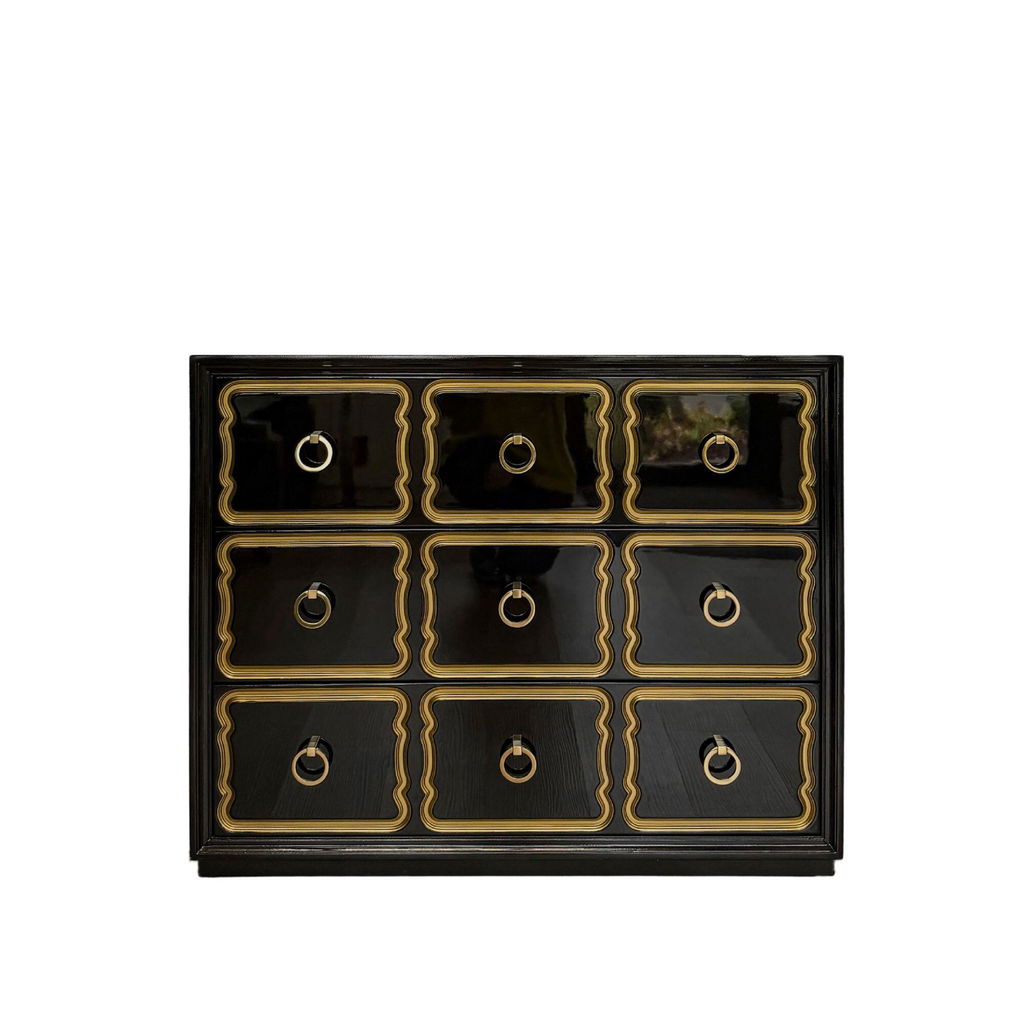
Named for my Grandma (& the original designer), the Dorothy Thorpe Espana chest is truly beautiful ~ destined to be a family heirloom. The care and attention to detail Casey gives is remarkable. Love “Dorothy” and have nothing but praise for Casey, the smooth process & beautiful result! Can’t thank you enough.
Thank you so much for the excellent personal service. Millie loves her new home and I love having a beautiful piece in which to store all of my clothes. Everything you do is with care and it shows!