

Such an interesting article and, of course, the women who pioneer both in front and behind the scenes always get left out of the story! Thank you for putting Alice back in front and center.

NATIONWIDE SHIPPING
Hey SoCal - Shippers headed your way soon!
Shipper headed to DC soon!
NATIONWIDE SHIPPING
Hey SoCal - Shippers headed your way soon!
Shipper headed to DC soon!
NATIONWIDE SHIPPING
Hey SoCal - Shippers headed your way soon!
Shipper headed to DC soon!
NATIONWIDE SHIPPING
Hey SoCal - Shippers headed your way soon!
Shipper headed to DC soon!
NATIONWIDE SHIPPING
Hey SoCal - Shippers headed your way soon!
Shipper headed to DC soon!
NATIONWIDE SHIPPING
Hey SoCal - Shippers headed your way soon!
Shipper headed to DC soon!
The woman who started a furniture tidal wave — and then history forgot to write her name down.
I've been working in this business long enough to take certain terminology for granted. Chippendale. Sheraton. Hepplewhite. These are the holy trinity of English cabinetmakers everyone in the antique world name-drops without thinking. In modern day, it's similar to referencing Mid-Century Modern or Art Deco, assuming everyone understands. Over time, these terms have become shorthand for an entire visual language that often started with one historic figure. Some have taken time to develop, and others have landed like a lightning bolt.
This week I went down a rabbit hole on Hepplewhite specifically, and I discovered something that has been knocking around in my head ever since.
Hepplewhite the man? Almost a ghost. Hepplewhite the style? Built by his widow!
Her name was Alice.

George Hepplewhite was a London cabinetmaker who died in 1786. He had a small shop at 48 Redcross Street in the Cripplegate parish, where he made furniture and presumably ran a quiet middle-class business. We know almost nothing else about him. We don't know precisely where he was born or when. We don't know who he worked for before starting his own shop. We don't know what his shop's bestseller was, who his clients were, whether he was witty at dinner parties, or what he looked like.
We know he was so unimportant in his own lifetime that the only trade directory of the era to mention his name spells his name wrong. They listed him as "Kepplewhite & Son."
And here's the truly remarkable part: there is not a single piece of furniture in any museum, private collection, or auction house anywhere in the world that can be authenticated as being made by George Hepplewhite. Not one chair. Not one sideboard. Not one secretary cabinet. He died, and his physical work vanished entirely.
When he died — intestate, no will — his estate was valued at less than £600. Modest. A notice ran in the Public Ledger of London in October 1786 announcing that the "valuable stock in trade and household furniture of Mr. Hepplewhite, cabinet manufacturer deceased" would be sold at auction.
That's the moment most stories like this end. The widow auctions off the shop, takes what she can, and disappears into the historical record.
Except Alice didn't do that.
She kept the business open and renamed it A. Hepplewhite & Co.
Then, two years after burying her husband, she did something almost no widow of her station did in 1788: she published a 126-plate folio called The Cabinet-Maker and Upholsterer's Guide, a comprehensive book of nearly 300 furniture designs covering every piece you might find in a fashionable late-Georgian home — sideboards, chests, beds, secretaries, bookcases, urn stands, mirrors, you name it.
And here's the part I cannot get over: in her preface, she made no claim that the designs were original. She wasn't pretending her husband invented these forms. She was, in plain modern terms, curating. She was looking at what the most desirable cabinetmakers across London were making, what was fashionable in the parlors and dining rooms of the new wealth, and she was assembling it under one cover with her husband's name on it.
She was the world's first furniture style editor. Kinda like the Anna Wintour of furniture making!
The book sold immediately. A second edition came out in 1789, and a new, heavily revised third edition in 1794. And because this was the very moment America was building itself, the Guide crossed the Atlantic and landed in the hands of cabinetmakers in Baltimore, Salem, Hartford, and New York. They took her patterns and made them their own, using eagles and stars as substitutes for British lions and such. They replaced English mahogany with locally sourced woods and created what we now call the American Federal style.
Every Federal-style sideboard in every museum in this country traces a paper trail back through Alice's Hepplewhite Guide. Every leggy buffet I've ever refinished is a great-great-grandchild of the designs Alice Hepplewhite curated into the book that would define another 200+ years of furniture styles.
The famous shield-back chair? Her curation. Or at least: hers to elevate, to publish, to package as part of a unified style. Without her book, that chair is just one cabinetmaker's idea among many. With her book, it became a movement.
Here is where it gets unbearable.
We don't know when Alice was born. We don't know her maiden name. We don't know where she came from, what her family did, how she met George, or what kind of education gave her the editorial confidence and business savvy to compile a folio of 300 designs and shop it to a serious London publisher.
We don't know when she died, or where she's buried, or whether anyone marked her grave.
After the third edition of the Guide in 1794, she disappears entirely from the historical record. The woman who sparked an international furniture genre — whose taste shaped the dining rooms of two continents for the next 240 years and counting — has no portrait, no surviving letters, no diary, no obituary anyone bothered to preserve.
We have her taste. We do not have her face.
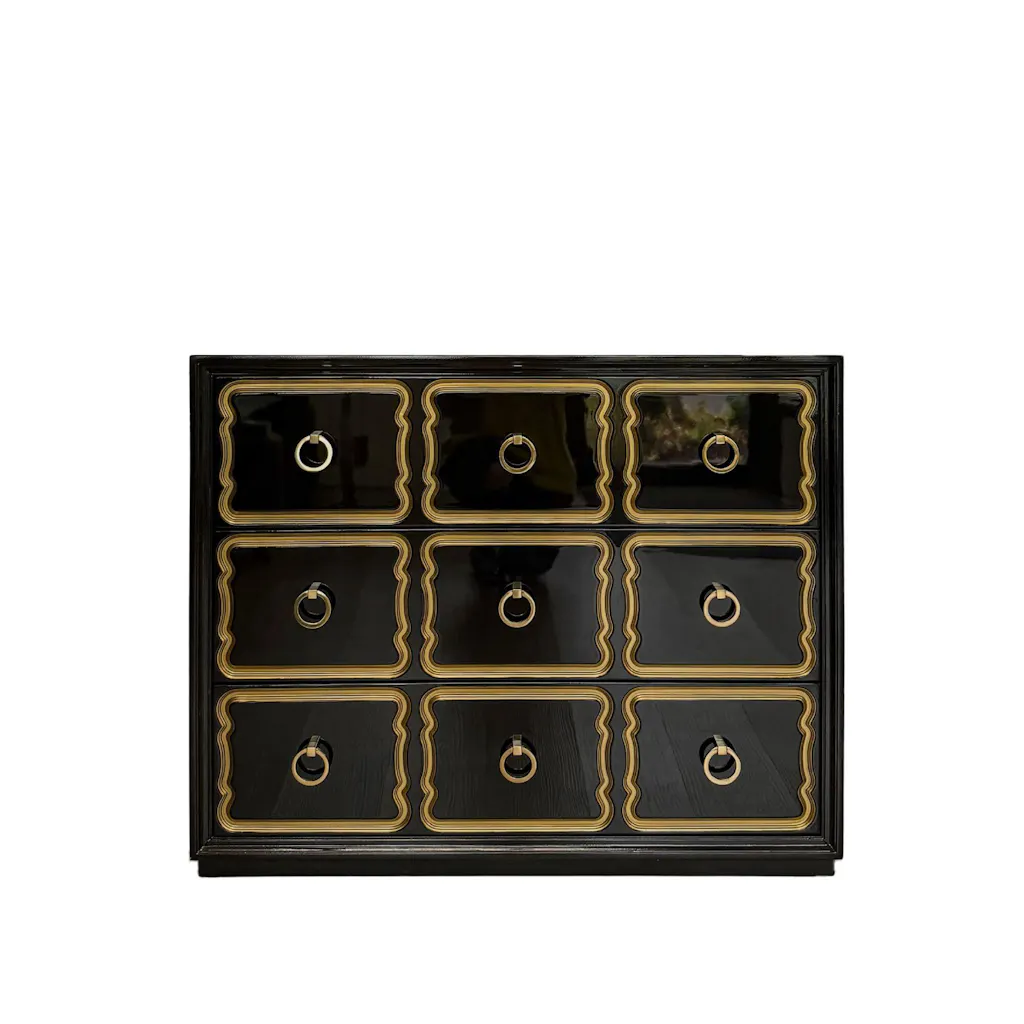
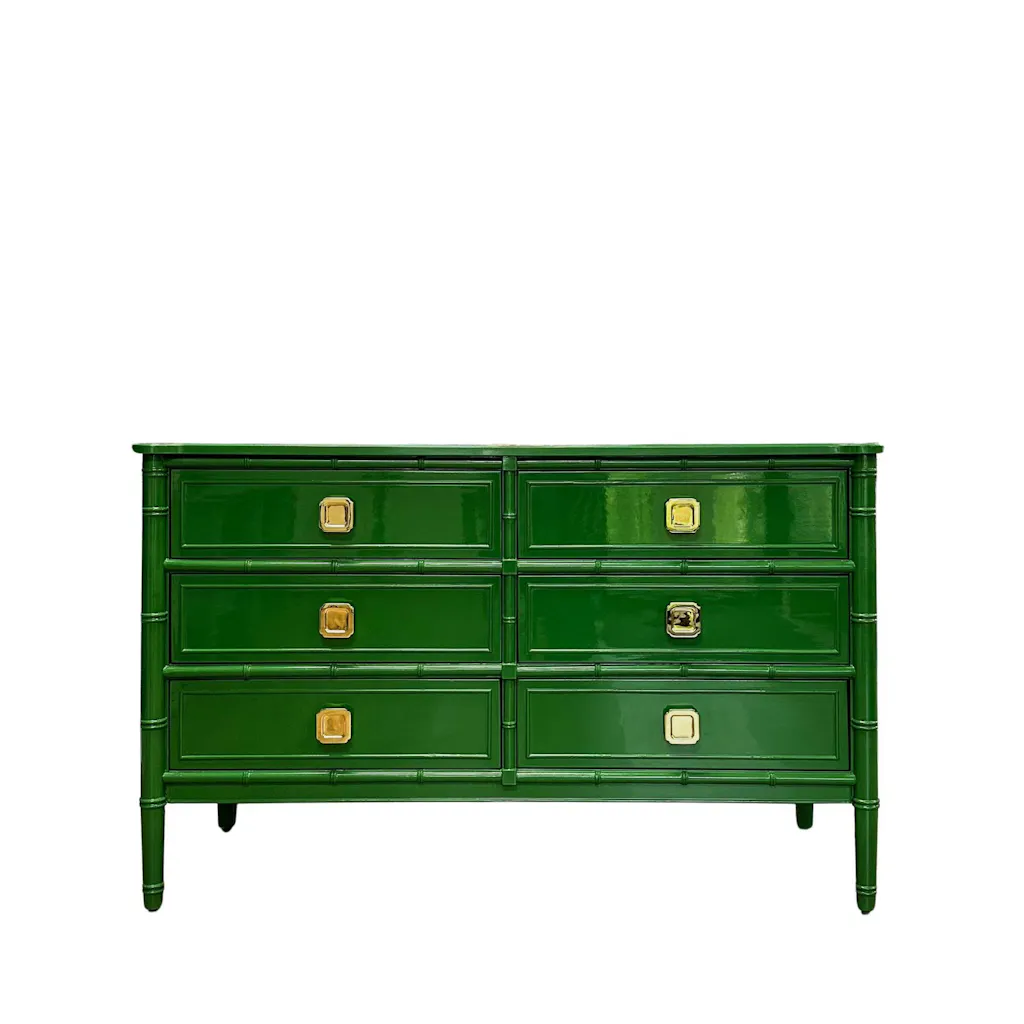
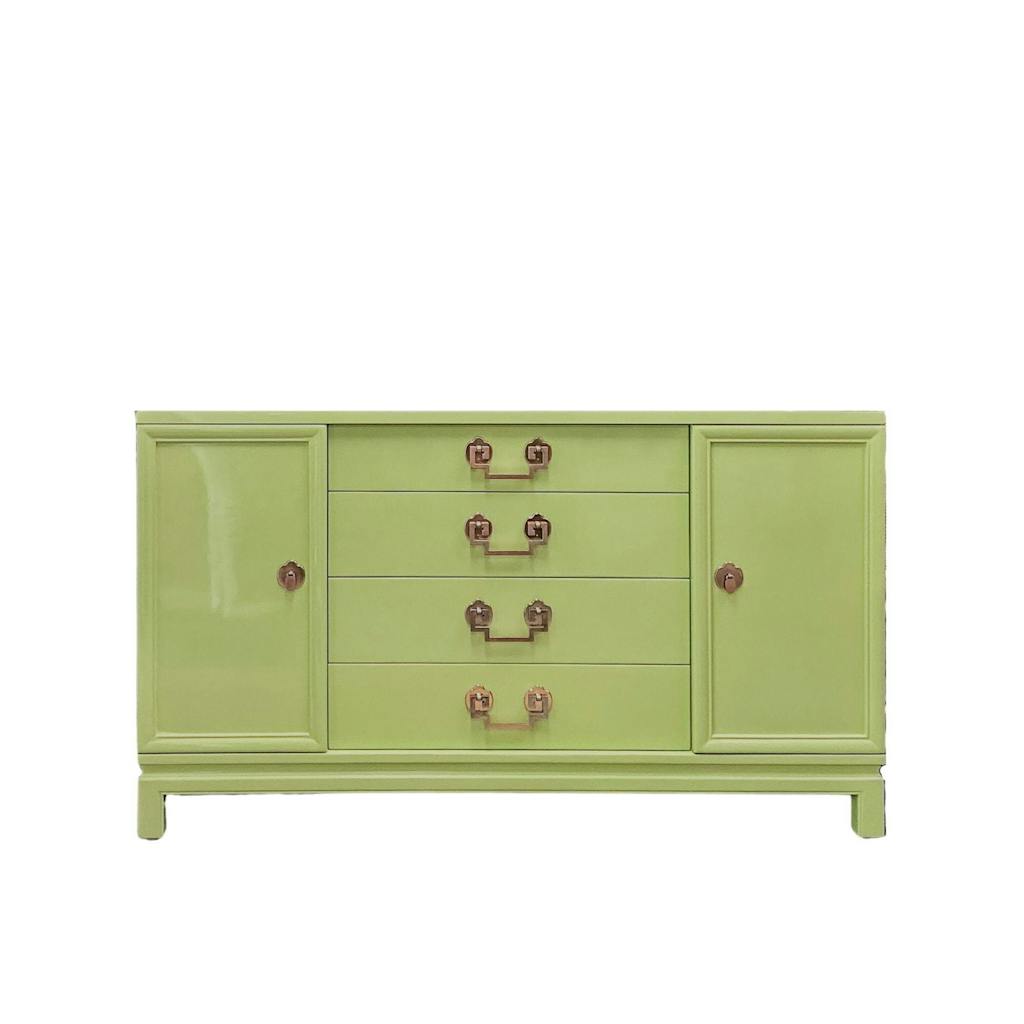
• Leggy Sideboards - like Barbara or Isabelle
• Spade Shaped Feet - like Beatrix
• Shield-Back Dining Chairs
The thing that's been weighing on my chest since I learned this is that none of this is unusual. This is just how our cultural record handles women.
George Hepplewhite, who made furniture no one can identify, has a Wikipedia entry, an estimated birth year, a written biography, and at least three encyclopedias that list him as one of the Big Three English cabinetmakers of the 18th century. He is taught in design history courses. His name is on a furniture style that fills American antique malls. I'm not saying he doesn't deserve credit, but so does Alice.
Alice Hepplewhite, who actually built that legacy from scratch, gets a footnote. Sometimes two, if the writer is generous.
I think about this in our workshop a lot, honestly. Every piece I refinish has a story. I've made it a practice to name each piece — almost always with a woman's name — and write a fictional backstory for her, because so many of these pieces did belong to women, and were curated and cared for by women, and were passed down through the female lines of families precisely because the men of the household had no relationship with them. That sideboard didn't matter to our grandfathers. It mattered to our grandmothers. And to her grandmother before her.
Our cultural storytelling would be so much richer if we knew the women. If we'd kept their letters. If we'd painted their portraits. If we'd thought, even once, that the person curating and selecting and elevating the work was as worth remembering as the man who'd built it.
Alice doesn't have a portrait. She probably never will.
But every time you walk past a serpentine sideboard with delicate tapered legs and a satinwood line of inlay running along its edge — every time you slow down at one in a showroom, or run your hand along its top in someone's grandmother's house — you can know her. That's Alice's work. That's her eye that made that piece possible.
She picked it. She curated it. She published it. She sent it across an ocean.
Alice Hepplewhite created the guide for furniture makers across the globe to build buffets, desks, china cabinets and dining chairs we still covet today. I thought her voice deserved recognition, given that so many of the pieces we refinish bear the Hepplewhite style.
Hepplewhite furniture is considered a style and not a brand name. The only reason we know George Hepplewhite's name is because his widow, Alice, wrote a master guide of all furniture made during that time. The style is known for leggy sideboards, spade-shaped feet, shield-back dining chairs, serpentine and bowfront dressers.
When an item is described as Hepplewhite, it means that it carries the design cues published in Alice Hepplewhite's The Cabinet-Maker and Upholsterer's Guide, published in 1788. There have never been any furniture items branded Hepplewhite.
Comments
Such an interesting article and, of course, the women who pioneer both in front and behind the scenes always get left out of the story! Thank you for putting Alice back in front and center.